Ocean facts · Ages 3–5
Six blue marlin facts.
One real little fish.
Meet the real ocean animal behind Marlie Blue. Read one fact at a time, look closely at the photograph, or jump straight into the free story.
Six simple blue marlin facts
1. A blue marlin is a fish.
It lives in water, breathes with gills, and swims with fins. A marlin is not a whale, dolphin, or shark.
2. Its pointy nose is called a bill.
The long bill is part of the marlin’s upper jaw. It helps make a blue marlin easy to recognize.
3. It wears two ocean colors.
A blue marlin is dark blue along its back and silvery underneath—like deep water above a flash of light.
4. It lives out in the open ocean.
Blue marlin travel through warm ocean water, often far from land. They can follow warm currents for long distances.
5. It eats fish and squid.
Blue marlin are hunters. Smaller fish and squid are part of their ocean diet.
6. A tiny beginning can grow very big.
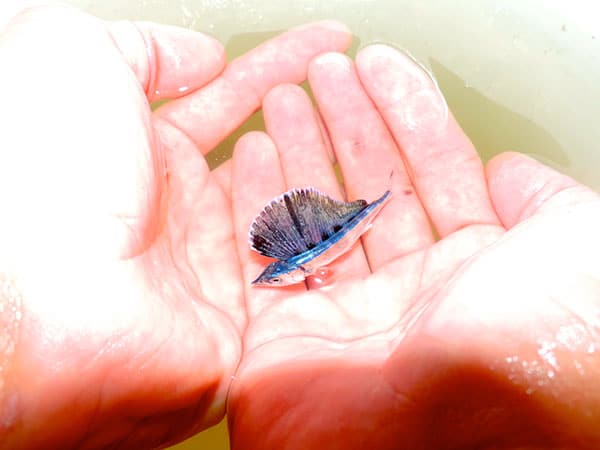
Blue marlin hatch from eggs in the open water. Some adult females can reach about 14 feet long—even though the little fish in this photograph fit in a person’s hand.
Fact becomes inspiration
Now meet the make-believe Marlie.
The photograph is real. Marlie’s pink bow, friendships, and dream of leaping over a wave belong to the story. Invite your child to spot one thing that is true about blue marlin and one thing the author imagined.
Quick answers for grown-ups
Are these facts written for preschoolers?
Yes. They use short explanations for ages 3–5 to explore with a grown-up. Choose one or two facts if that better fits your child’s attention.
Where were the animal facts checked?
The species details were checked against National Geographic Kids’ blue marlin profile, NOAA Fisheries’ blue marlin profile, and the Florida Museum’s species profile. The real photograph’s history is documented in The Billfish Foundation’s 2013 account.
Is Marlie Blue a true story?
Marlie’s adventure is fiction inspired by a real baby blue marlin encountered offshore of Charleston, South Carolina. Read the full origin story.
Where can children read the picture book?
The complete illustrated story, narrated reader, and printable book are free, with no sign-up.