Life Lessons · Book 2
Marlie Blue
and the Little Idea
A helpful map. A little shop. An idea that grows.
When reef families want to visit Moon Meadow, Marlie spots a little problem—and discovers she can create something to help.
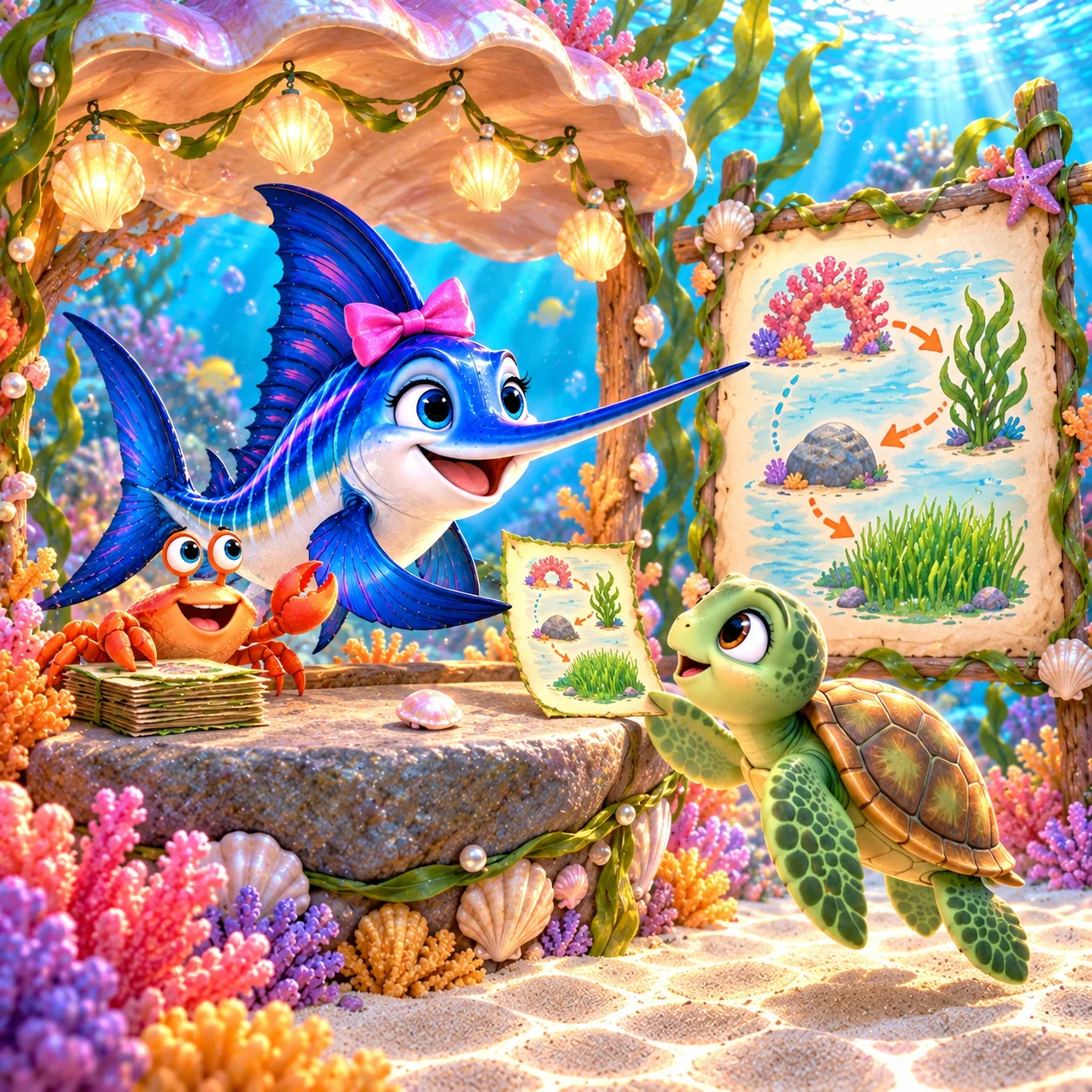 A little idea can grow.
You can start something of your own. Notice a need. Try a little idea. Learn as you go.
For grown-ups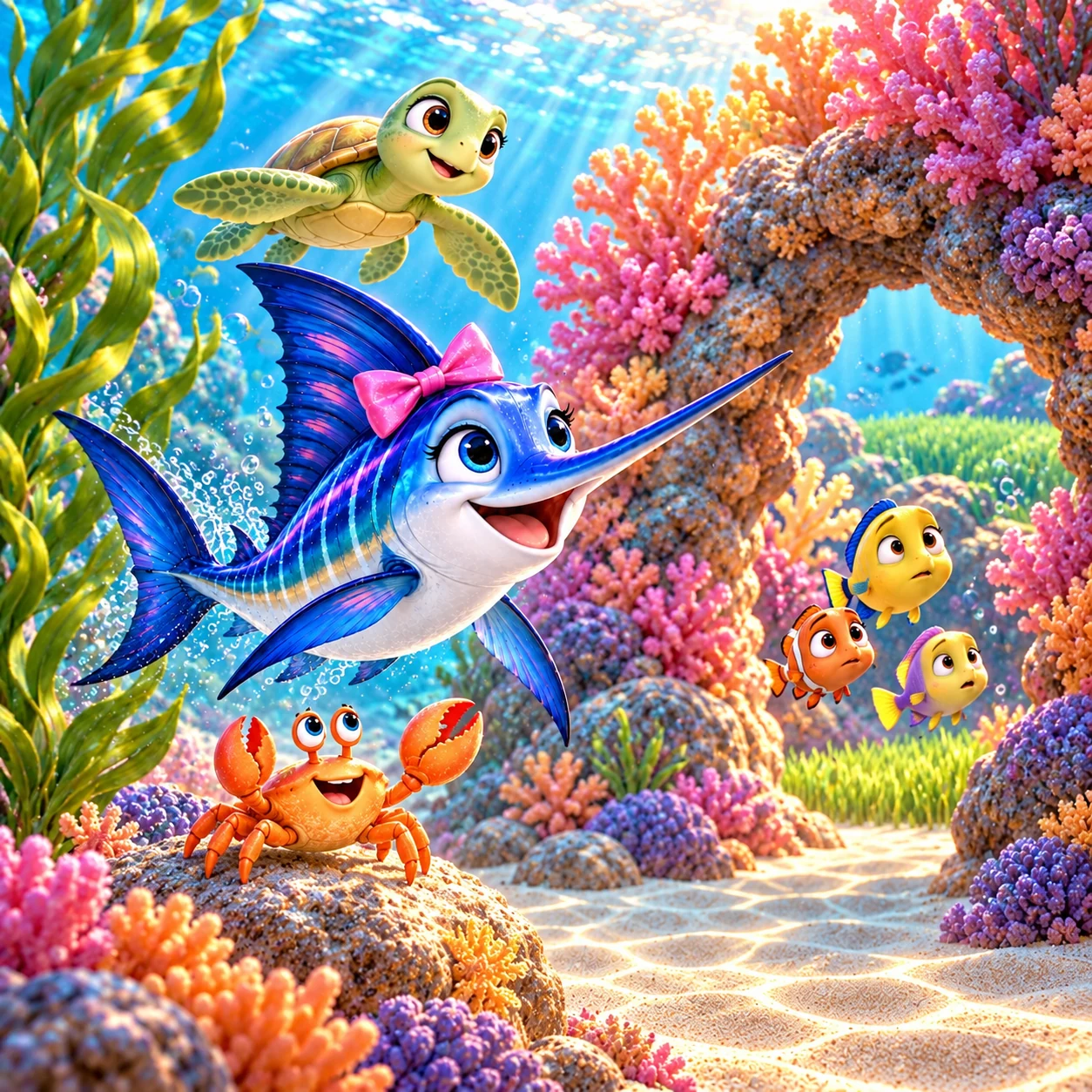
Pages 1–2
A little need
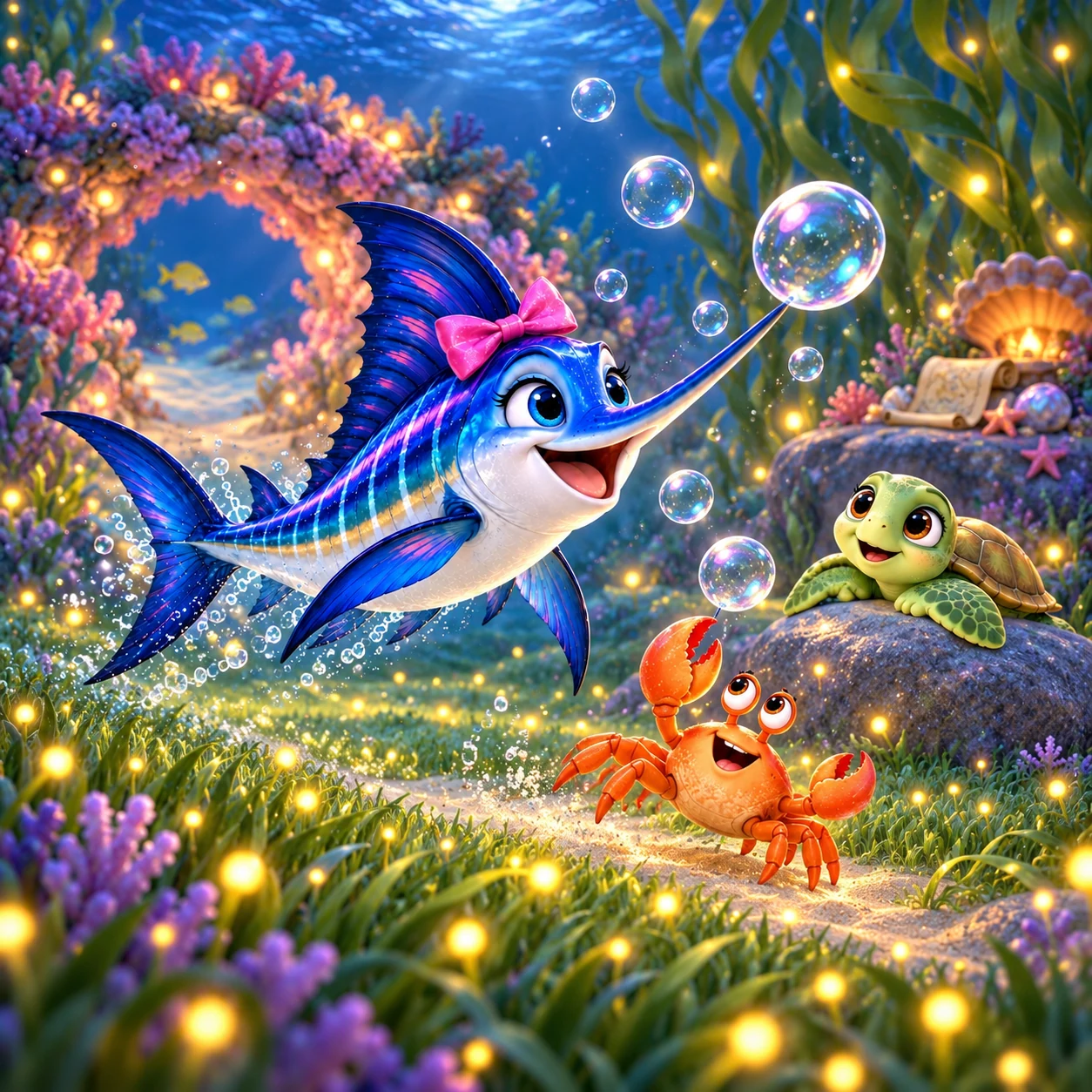
Warm sunlight wiggled through the sea. Marlie Blue and Coco the Crab played bubble tag. Her pink bow bobbed. Pop!
Near the coral arch, a family swam in circles. “Which way to Moon Meadow?” they asked.
“We want to see the evening sparkles!”
Pages 3–4
So many trips
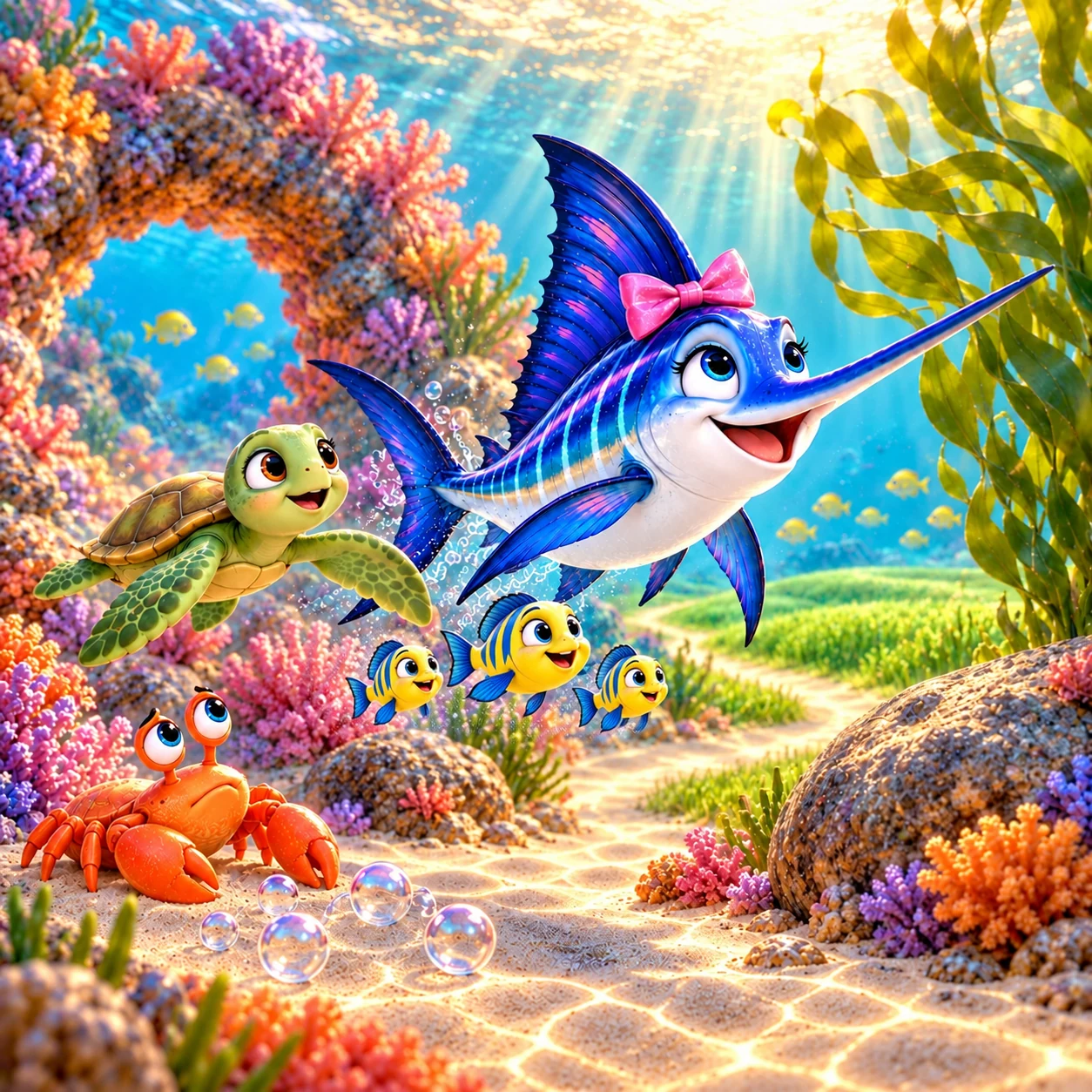
“Follow me!” said Marlie. Past the waving kelp. Around the big round rock. There it was—the meadow, soft and green.
On her way back, another family asked. Then another! Marlie liked helping.
But when she returned, Coco had packed up their game.
Pages 5–6
A little idea
“I wish I could help everyone and still play,” Marlie sighed. Coco tapped his chin. “Could you make something that helps?”
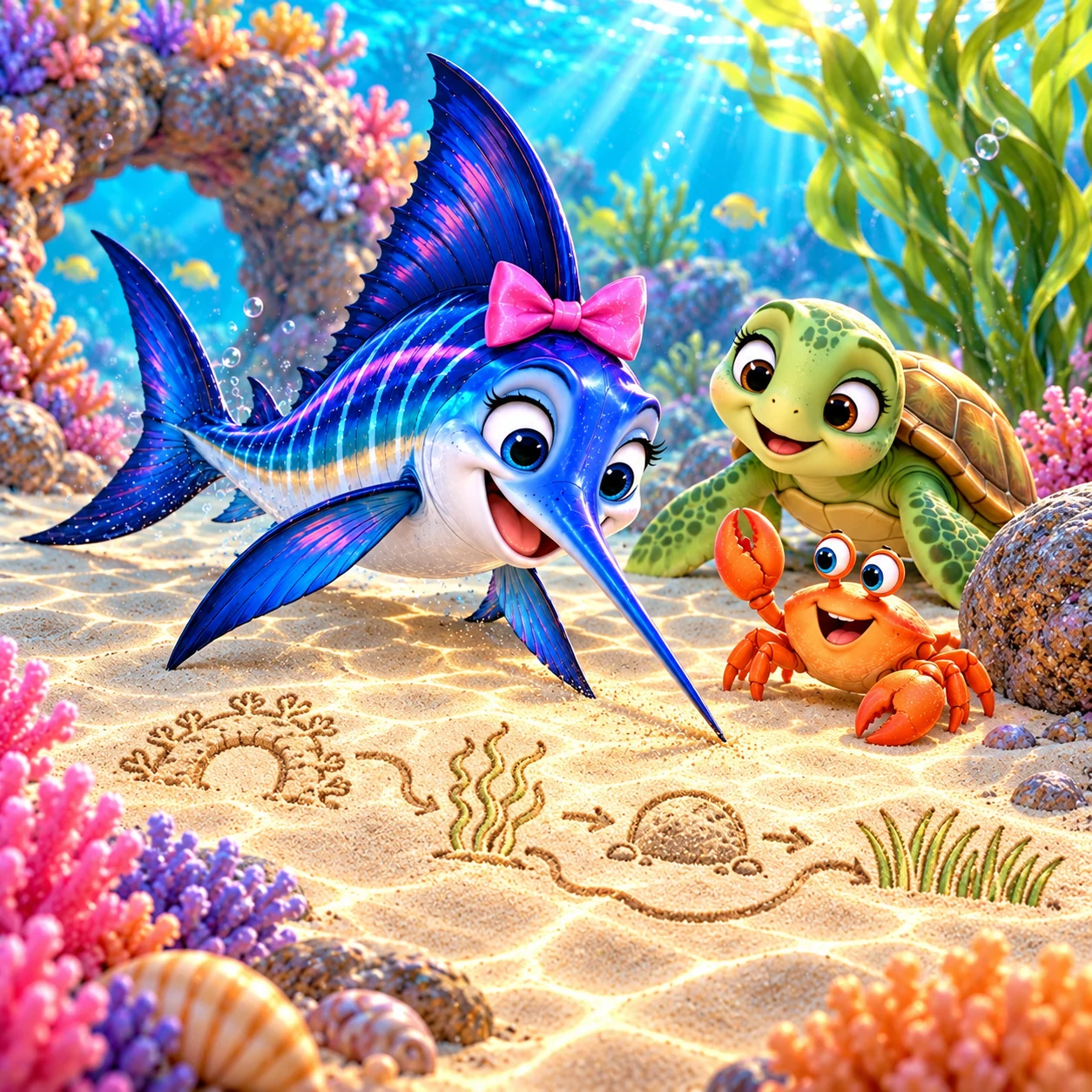
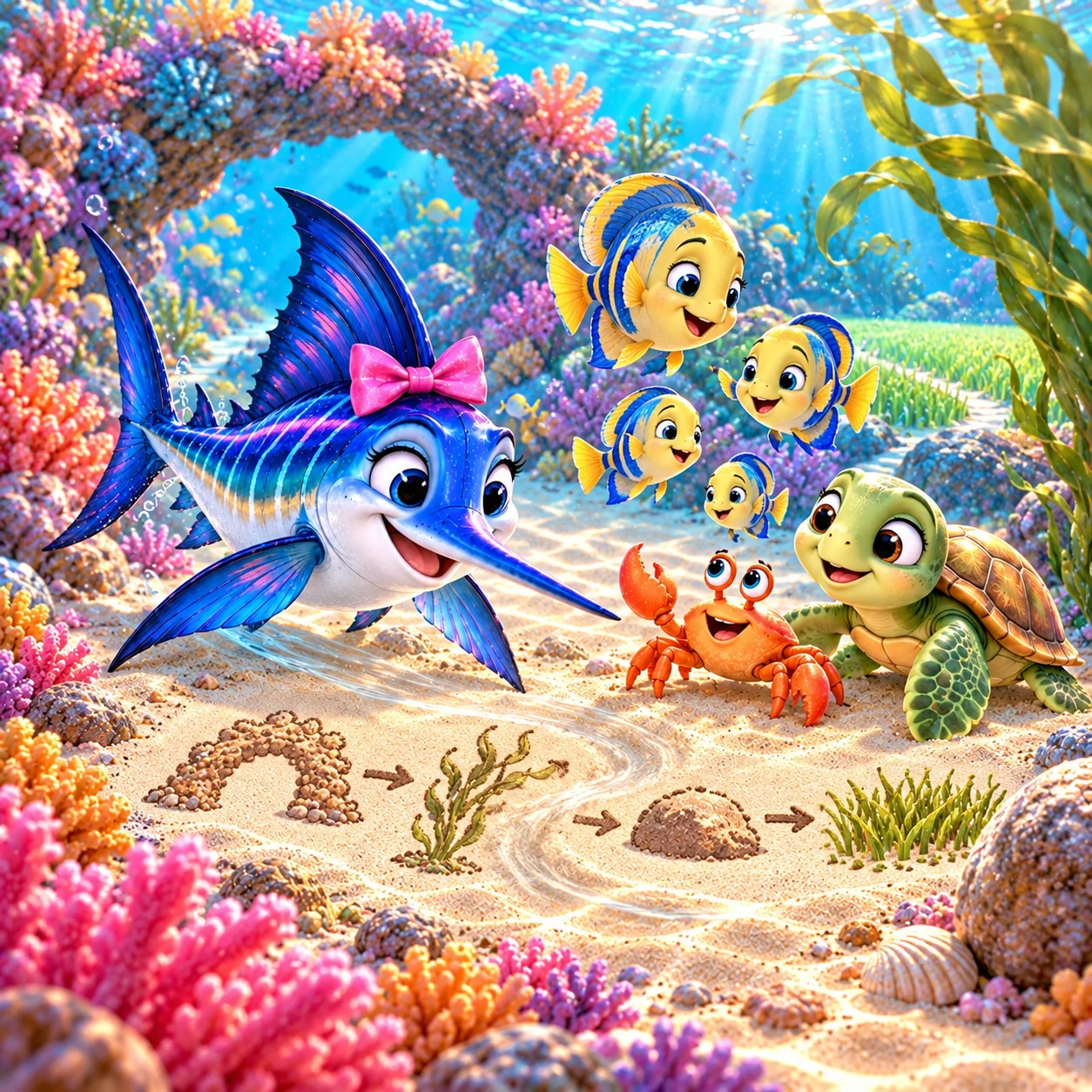
Marlie’s eyes grew bright. “A map!” She drew a winding path in the sand.
A little idea can grow.
Pages 7–8
The idea is still there
Then—swish! A current smudged the path. “My idea washed away,” said Marlie. “The drawing did,” said Coco. “Your idea didn’t.”
Marlie asked a passing family, “What would make a good map?” “Big pictures,” they said.
“And something we can take along.”
Pages 9–10
Tap. Whirr. Plip!
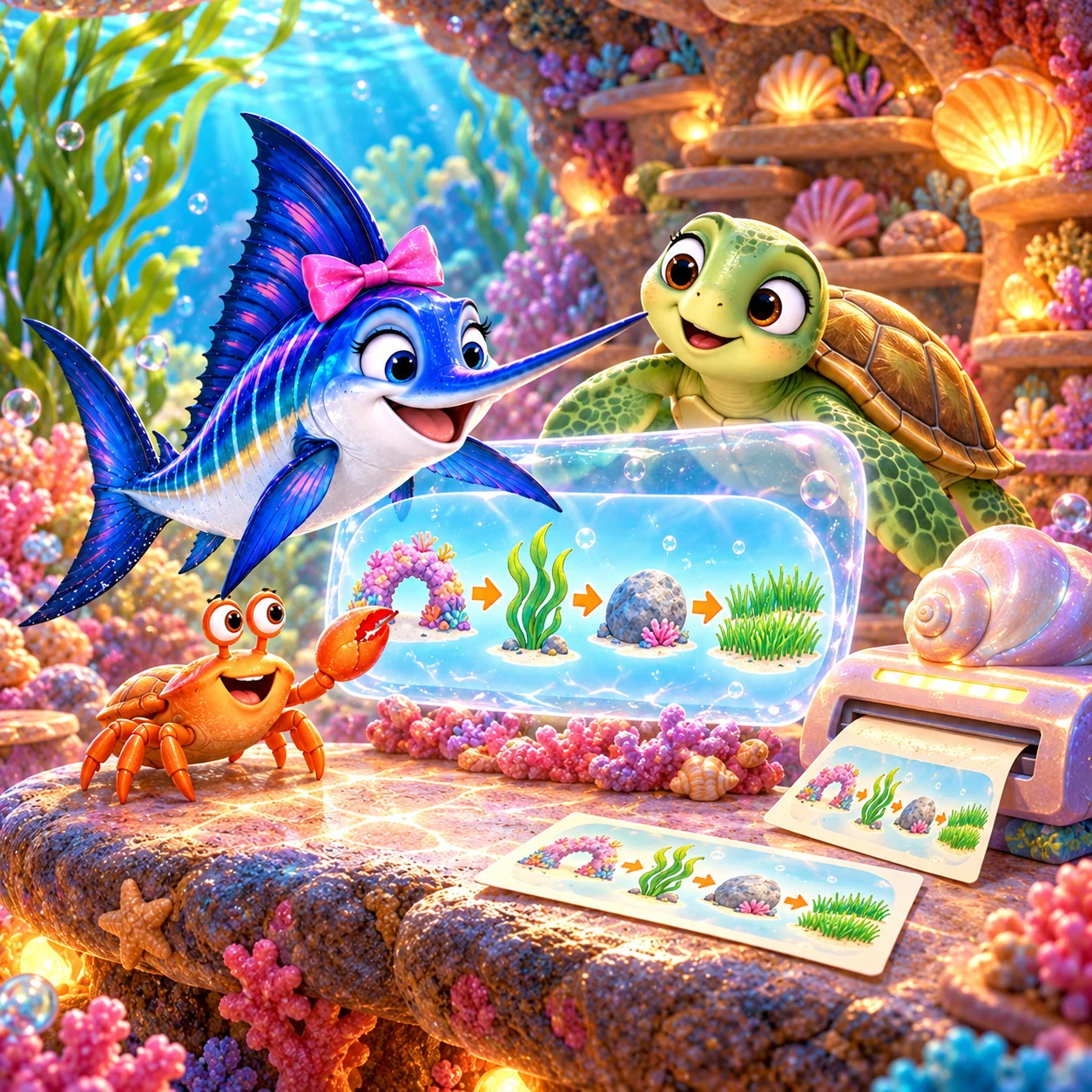
Tilly had a bubble-screen. With her help, Marlie drew the arch, the kelp, and the rock. Coco added big arrows.
Tap. Whirr. Plip! The little printer made a leaf-card map. Then another. One drawing could become many maps!
Marlie’s bow gave a happy wiggle.
Pages 11–12
A tiny first try
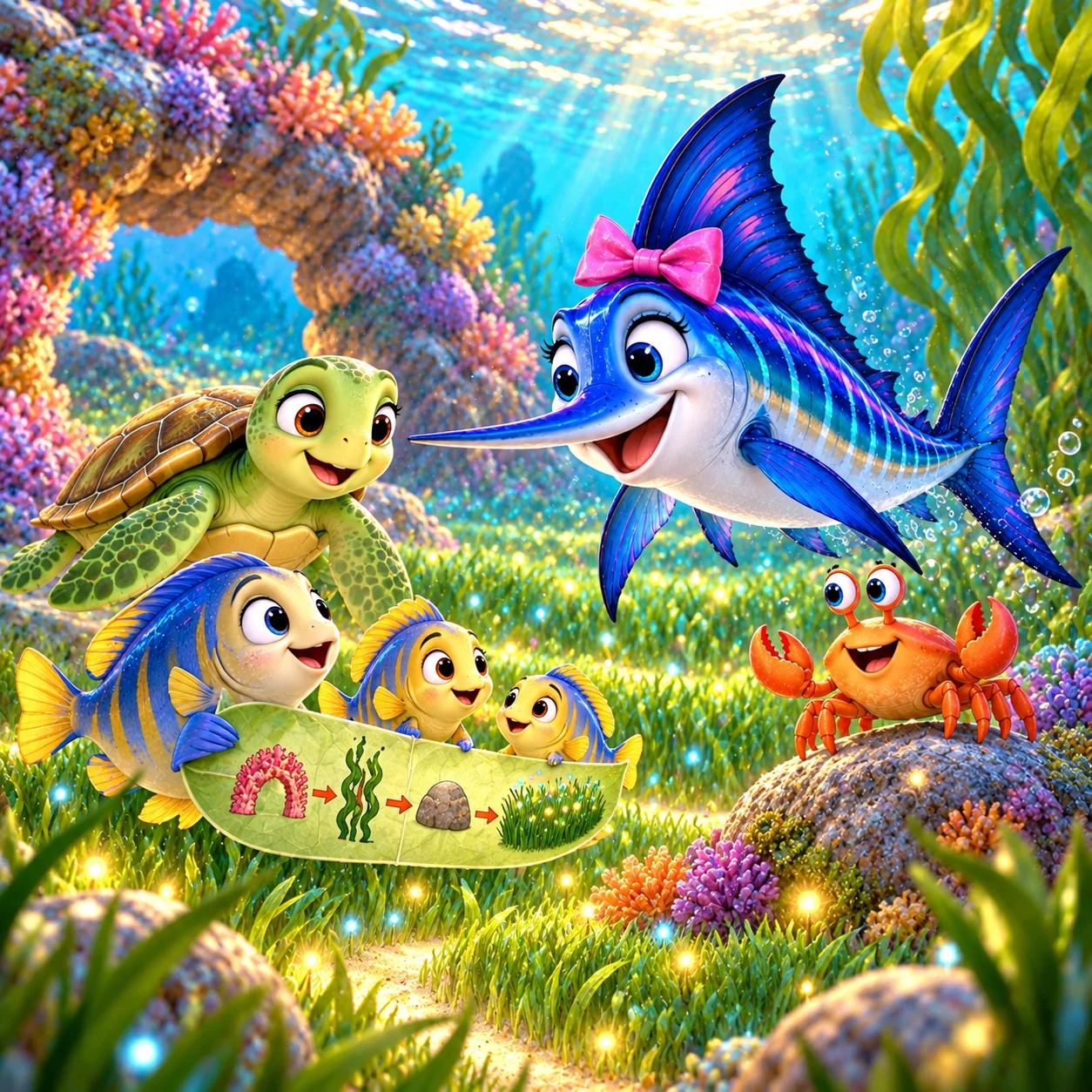
A family tried one. They followed the pictures, found the meadow, and waved. “That helped!” Marlie beamed. Her little idea was working.
“Could I open a little map shop?” asked Marlie. “Let’s try,” said Tilly.
“Start small. Listen. Make it better.”
Pages 13–14
A shop of her own
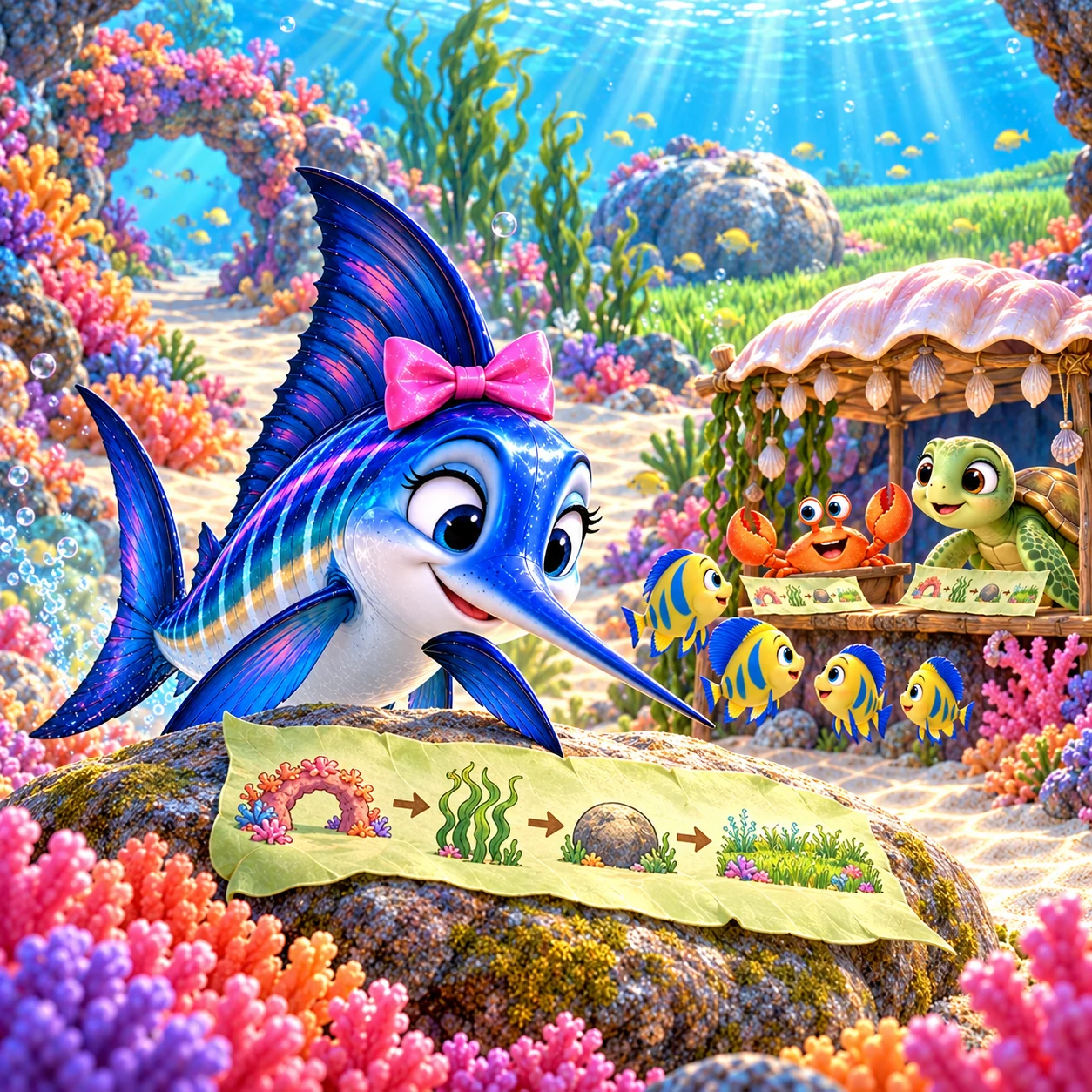
With Tilly nearby, Marlie opened her map shop. One take-along map cost one shell token. She had a little business of her own!
Beside the shop, she put a big, free map. Everyone could look. Families could buy a small one to carry.
Coco clicked his claws.
Pages 15–16
Three little tokens
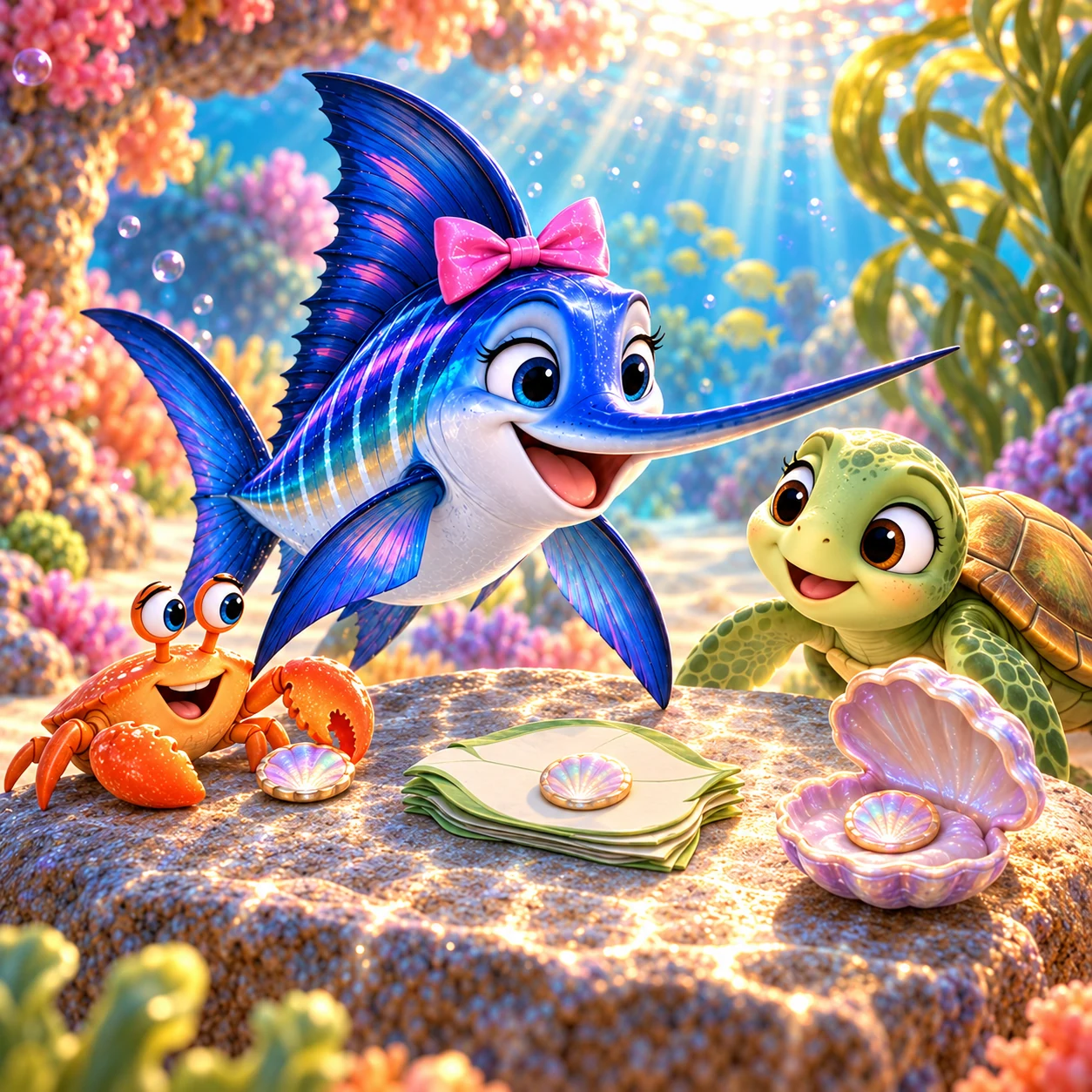
One family bought a map. Then two more. Clink. Clink. Clink. Three shell tokens! A little idea can grow.
Marlie counted: One token to share with Coco. One for more map supplies. One to save.
They tucked it in a little shell.
Pages 17–18
A new way to help
Each morning, Marlie checked the path and listened to visitors. If something changed, she made her maps better. Good ideas needed care.
Then—tap, whirr, plip! Her drawing helped another family. Marlie didn’t have to swim every trip.
She had made a new way to help.
Pages 19–20
Room to play
That evening, Coco called, “Bubble tag?” “Yes!” Marlie laughed. There was time to play. And time to watch the meadow sparkle.
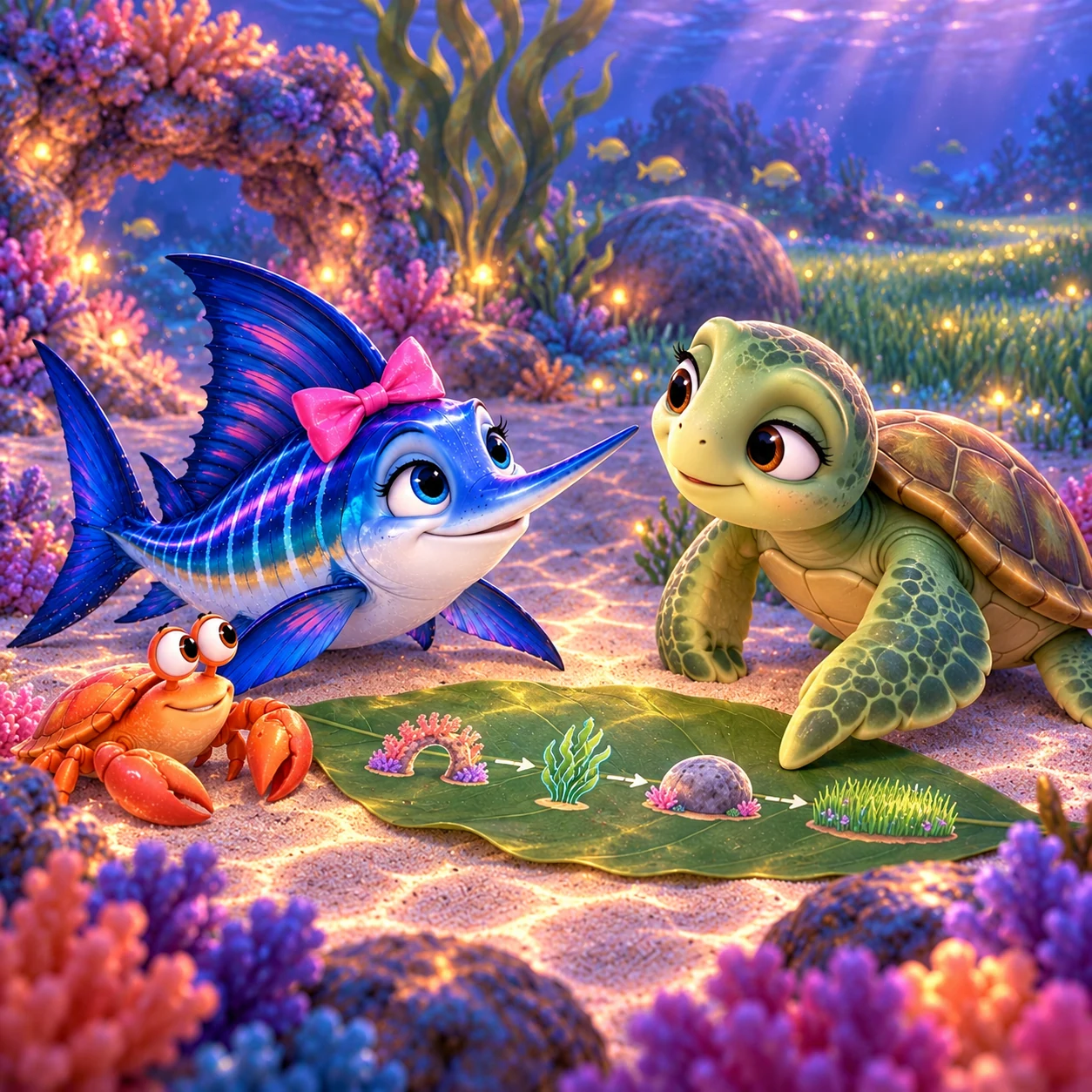
Beside Tilly, Marlie whispered, “Can little fish really make big things?” “Little fish can begin,” she said.
“You have time to try, learn, and grow.”
Pages 21–22
Yours to grow
“Will every idea work?” asked Marlie. “No,” said Tilly gently. “But every try can teach you something. And you can ask for help.”
“This is something you made,” Tilly said.
“You can care for it, change it, and choose what comes next.”
Pages 23–24
Time to dream
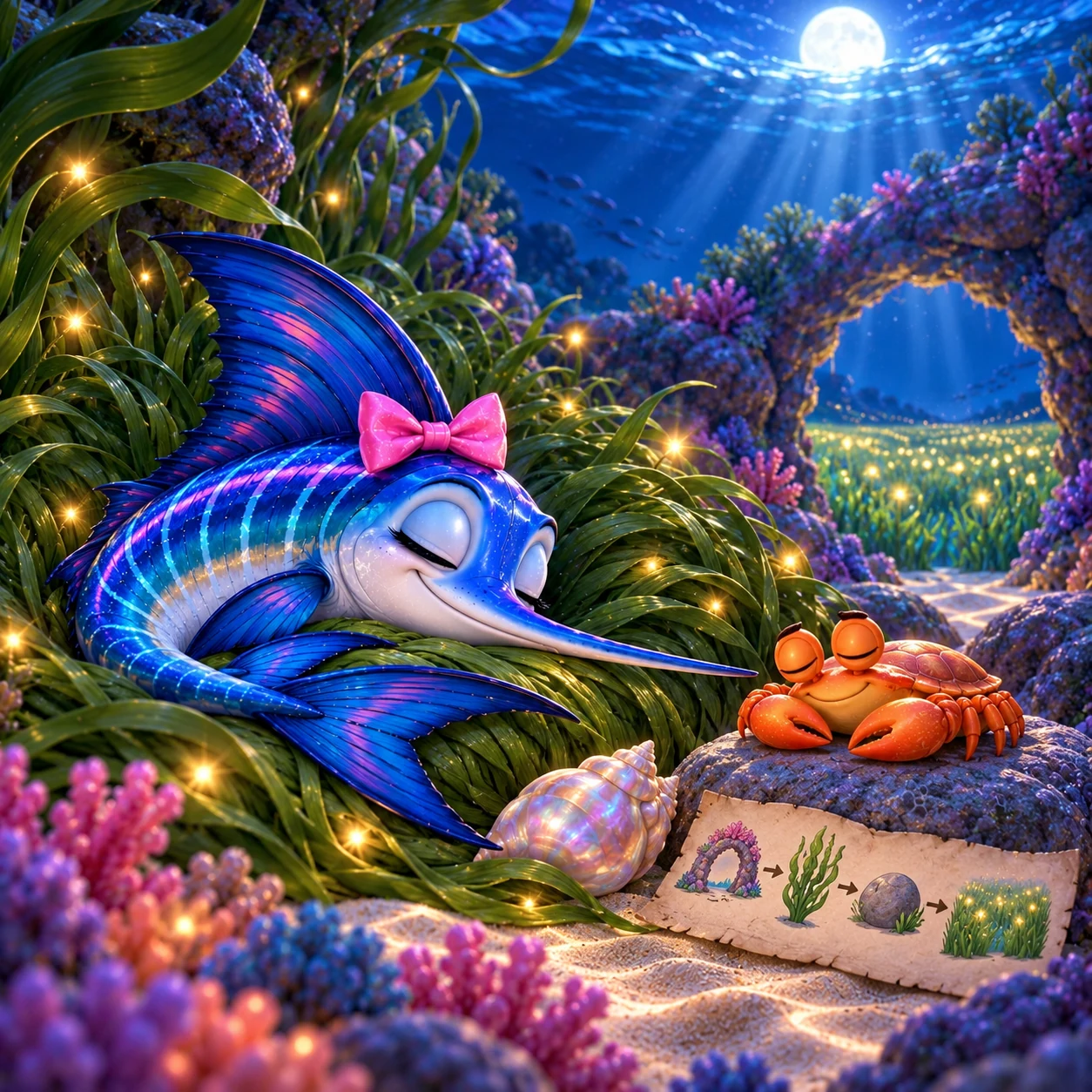
The meadow shimmered like a sky of tiny stars. Coco settled on a smooth stone. Marlie’s next idea could wait. Now it was time to rest.
Home in her cozy cove, Marlie closed her eyes. Her pink bow rested softly. Little fish, big dream.
A little idea can grow.
A little thought before sleep
What would you love to make?
No need to answer tonight.
Good night, little dreamer.
For grown-ups · The life lesson
A gentle first story about entrepreneurship.
Marlie learns that a business starts with something useful. She asks for help, makes a small first try, listens, improves it, and uses a tool to make more. The business belongs to her, and she shares the work and the rewards fairly.
Starting small while you’re young leaves room to learn. Building something of your own can create more choices over time. Businesses still need care; this is a story about possibility, creativity, and independence.
Three little questions
- What did Marlie notice that other fish needed?
- Who helped her when her first idea washed away?
- What could we make that would help someone?
Try it together: Draw a pretend shop and one thing it would make. Use paper tokens for customers. A grown-up can help with any tools, technology, or real selling.
Story and illustrations created with AI assistance under the direction of Joey Cagle. Read-aloud narration uses an AI-generated voice.